
The Challenge
Manual inspection of goods train wagons is a slow, hazardous, and error-prone process. In a high-volume freight environment, inspectors are required to manually check thousands of wagons daily for structural integrity, door security, and thermal hazards. This often results in critical faults like rusted panels, partially open doors, or brake binding going unnoticed until they cause significant operational delays or safety incidents.
The client needed a solution that could provide consistent, 24/7 inspection of passing trains at full operational speeds, identifying multiple defect types simultaneously and alerting control room staff in real-time before a wagon could become a liability on the track.
The human-dependent workflow was also a major bottleneck, with train movements often restricted by the speed of manual walk-around inspections at junction points, costing approximately ₹3.8 Cr annually in lost time and emergency maintenance.
Our Solution
AdaptNXT developed and deployed an end-to-end AI-powered inspection system that utilizes high-speed trackside cameras and advanced Computer Vision models to automate the health monitoring of goods train wagons:
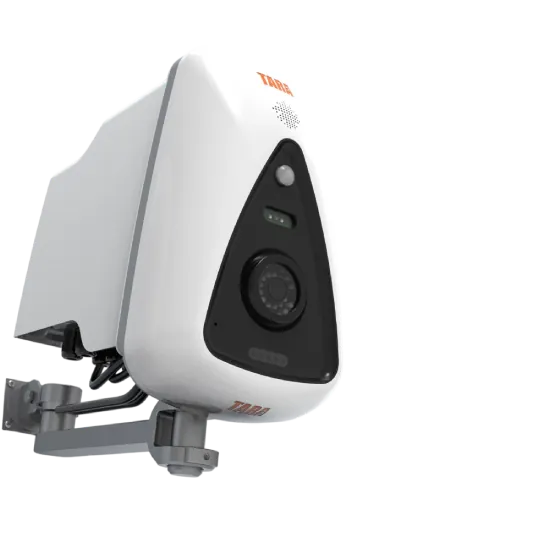
- Multi-Angle Vision Array: Deployed ruggedized, high-definition cameras at entry/exit points of major yards. These arrays capture high-speed frames of the train's side, roof, and undercarriage from multiple angles as it transits at speeds up to 100 km/h.
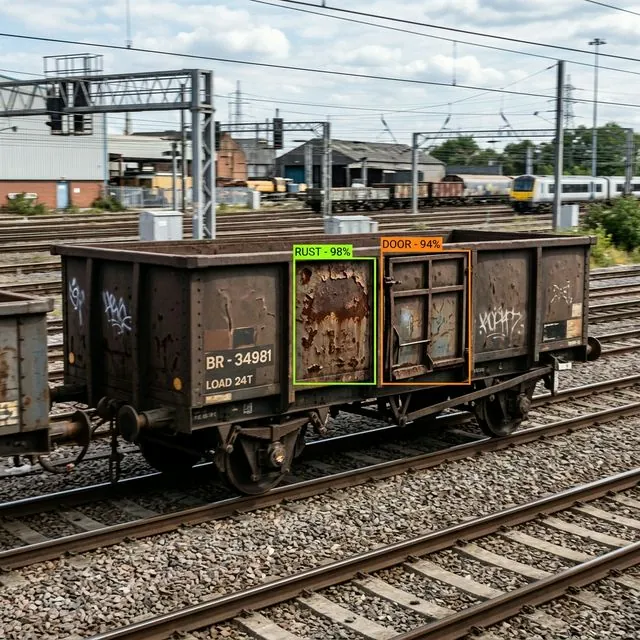
- Comprehensive Defect Detection Models: Trained custom Deep Learning models (using YOLO and semantic segmentation) to identify specific wagon faults:
- Structural Integrity: Detection of severe rust, broken panels, and compromised structural markings.
- Wagon Door Security: Real-time identification of open or partially open doors that could lead to cargo theft or infrastructure damage.
- Underframe Hazards: Identification of smoke or thermal haze near wheelsets, indicating potential brake binding or bearing failure.
- Real-Time Alerting Engine: Integrated the vision pipeline with a low-latency alerting system. When a critical fault is detected, an alarm is instantly triggered in the Central Control Room, displaying the exact wagon number and the nature of the fault.
- Digital Maintenance Manifest: Automatically generates a digital report for each incoming train, highlighting specific wagons that require immediate attention, allowing maintenance crews to skip healthy wagons and focus on repairs.
- Edge-to-Cloud Architecture: Implemented edge processing for immediate fault detection and event-based cloud uploads for long-term historical analysis and model retraining.
The Impact
The AI-driven inspection system has redefined freight safety standards, enabling the operator to transition from a reactive manual model to a proactive, automated inspection workflow:
- 80% reduction in manual inspection time: Crews now focus solely on flagged wagons, drastically increasing the throughput of the freight yard.
- Zero "Open Door" incidents reached destination points during the 6-month pilot, preventing significant cargo loss and improving safety for trackside personnel.
- 98% accuracy in structural defect detection: The system identified 40+ critical structural issues that had been missed by previous manual inspections.
- Saved ₹3.8 Cr annually by reducing unplanned stoppages, preventing derailment-level events, and optimizing labor allocation for maintenance teams.