

The Challenge
Locomotive pilots operate in high-pressure environments where split-second decisions can prevent catastrophic incidents. However, many modern locomotives still rely on fragmented, legacy display systems that lack real-time integration with core engine diagnostics and safety protocols. These disjointed interfaces increase cognitive load, leading to delayed responses to critical alarms and higher maintenance overhead due to inadequate event logging.
Our client, a leading global rolling stock manufacturer, faced a significant challenge: their existing display units were difficult to update, lacked intuitive HMI design, and couldn't efficiently consolidate the vast stream of telemetry data from traction, braking, and diagnostic subsystems into a single, reliable point of reference for the pilot.
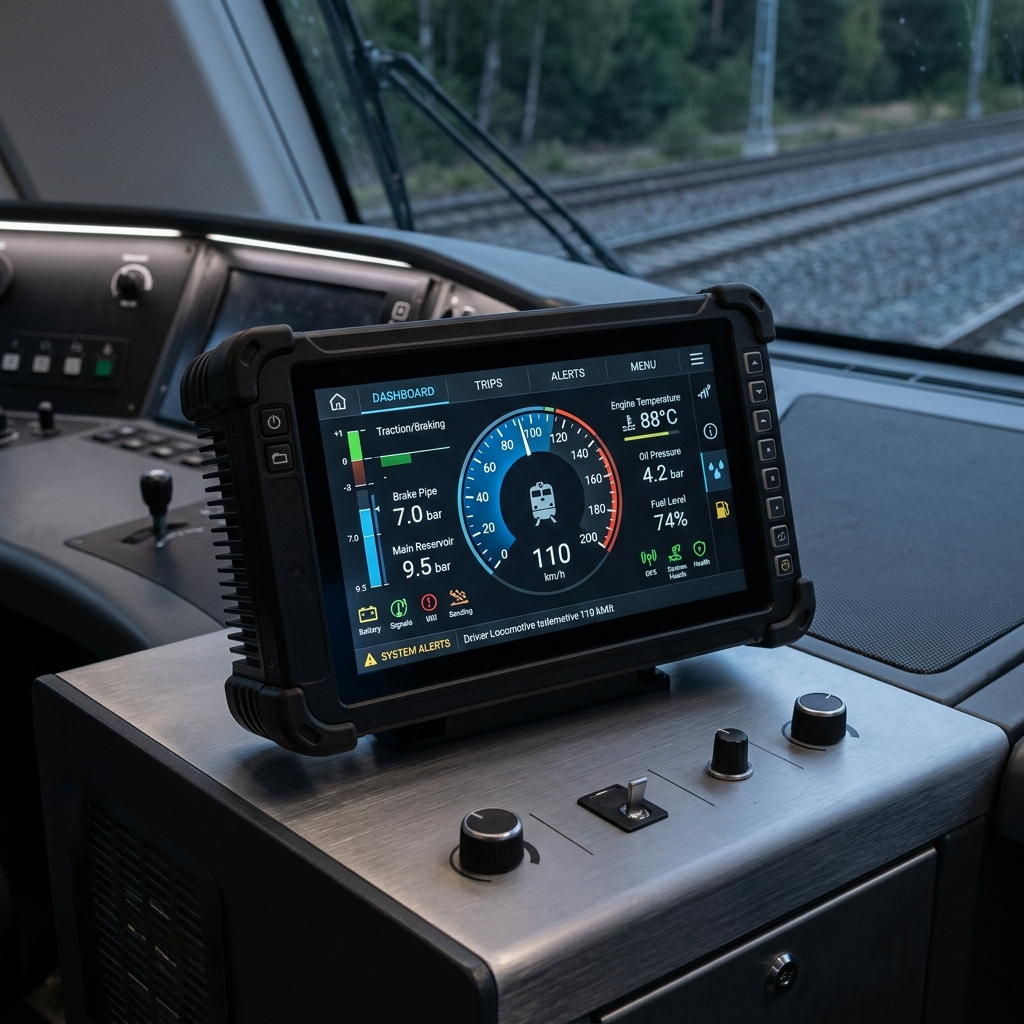
The requirement was clear: a ruggedized, high-performance Driver Display Unit (DDU) developed from the ground up, capable of operating flawlessly in extreme industrial conditions while providing a modern, priority-driven information interface.
Our Solution
AdaptNXT developed a complete software and firmware stack for the DDU, focusing on reliability, speed, and pilot-centric design:
- High-Performance Qt/QML GUI: Engineered a custom, low-latency graphical user interface using Qt/QML. The interface was optimized for high-contrast visibility across diverse lighting conditions (from direct sunlight to night operations) and featured a priority-driven layout to minimize pilot distraction.
- Robust C++ Backend: Developed a multi-threaded C++ backend to handle real-time data ingestion, asynchronous processing, and fail-safe communication with the locomotive's Central Control Unit (CCU).
- Industrial Protocol Integration: Implemented deep integration with standard railway communication protocols, including MVB (Multifunction Vehicle Bus) and CANopen, ensuring seamless data exchange between the DDU and all critical locomotive subsystems.
- Custom Embedded Firmware: Built the underlying firmware from scratch, including a customized bootloader that reduced startup time to under 10 seconds. Hardware-level watchdog timers were implemented to ensure automatic recovery in the event of any system hang.
- Multi-Layered Safety Architecture: Designed a sophisticated alarm management system that uses visual and auditory cues to categorize alerts (Critical, Warning, Info), ensuring that safety-critical data like brake failure or fire alerts are never missed.
- Integrated Maintenance Logbook: Enabled high-granularity data logging on the device, allowing maintenance crews to download detailed event histories and diagnostic snapshots for rapid troubleshooting and post-trip analysis.
- User-Centric HMI Workshops: Conducted iterative usability testing with actual loco pilots to refine touch targets, navigation flows, and alarm visualizations, resulting in an interface that feels intuitive even in high-stress scenarios.
The Impact
The new DDU has become a standard component in the manufacturer's latest fleet, delivering measurable improvements in safety and operational efficiency:
- 30% reduction in pilot response time to critical alarms, thanks to the intuitive, prioritized alert visualization system that highlights the most urgent tasks instantly.
- 25% decrease in Mean Time to Repair (MTTR) accomplished by providing maintenance teams with instant, actionable diagnostic data directly through the DDU interface, eliminating guesswork.
- Zero reported critical software failures during 12 months of intensive field testing across diverse geographies and weather conditions, proving the robustness of the custom-built stack.
- Standardized Fleet Interface: The unified design has reduced pilot training time by 40% across different locomotive models using the same DDU software platform.