
Before 2015, if you wanted an Artificial Intelligence model to find a pedestrian in a photograph, the process was painfully slow. Traditional sliding window algorithms would scan the image from top-left to bottom-right, analyzing a tiny patch of pixels at a time, asking, "Is this a pedestrian? No." Then it would shift slightly to the right and ask again. It was the computational equivalent of searching a dark room with a tiny flashlight.
This method was acceptable for analyzing static photographs, but it was disastrous for video. If an autonomous car takes three seconds to analyze one frame of a video feed driving at 45 mph, the system is useless. Then, a research paper introduced YOLO: "You Only Look Once."
The YOLO Paradigm Shift
YOLO completely flipped the architecture of object detection. Instead of scanning an image piecemeal thousands of times, YOLO approaches the image globally. The neural network looks at the entire image exactly one time (hence the name).
Here is how it works under the hood:
- Grid Division: YOLO takes the raw 1080p image and divides it into a grid (for example, a 13x13 grid).
- Bounding Box Prediction: Within each grid cell, the algorithm simultaneously predicts multiple "bounding boxes" (the rectangles you see drawn around objects in AI demos). It predicts the size of the box and how confident it is that an object exists inside that box.
- Class Prediction: While predicting the boxes, it also predicts the class of the object (e.g., Is it a dog, a car, or a person?).
- The Intersection (NMS): Finally, it uses a technique called Non-Maximum Suppression to filter out overlapping boxes, leaving only the single most accurate box around each detected object.
Because YOLO predicts the locations and classes in one single, massive matrix multiplication across the entire image, it is blindingly fast. While older algorithms measured processing speed in "seconds per frame," YOLO introduced speed measured in "Frames Per Second" (FPS). Modern iterations like YOLOv8 or YOLOv10 can process high-resolution video streams at over 60 to 100 FPS on standard GPU hardware.
Transforming Industry with Real-Time Detection
The speed of YOLO unlocked entirely new industries that rely on split-second reaction times:
1. Smart Retail and Frictionless Checkout
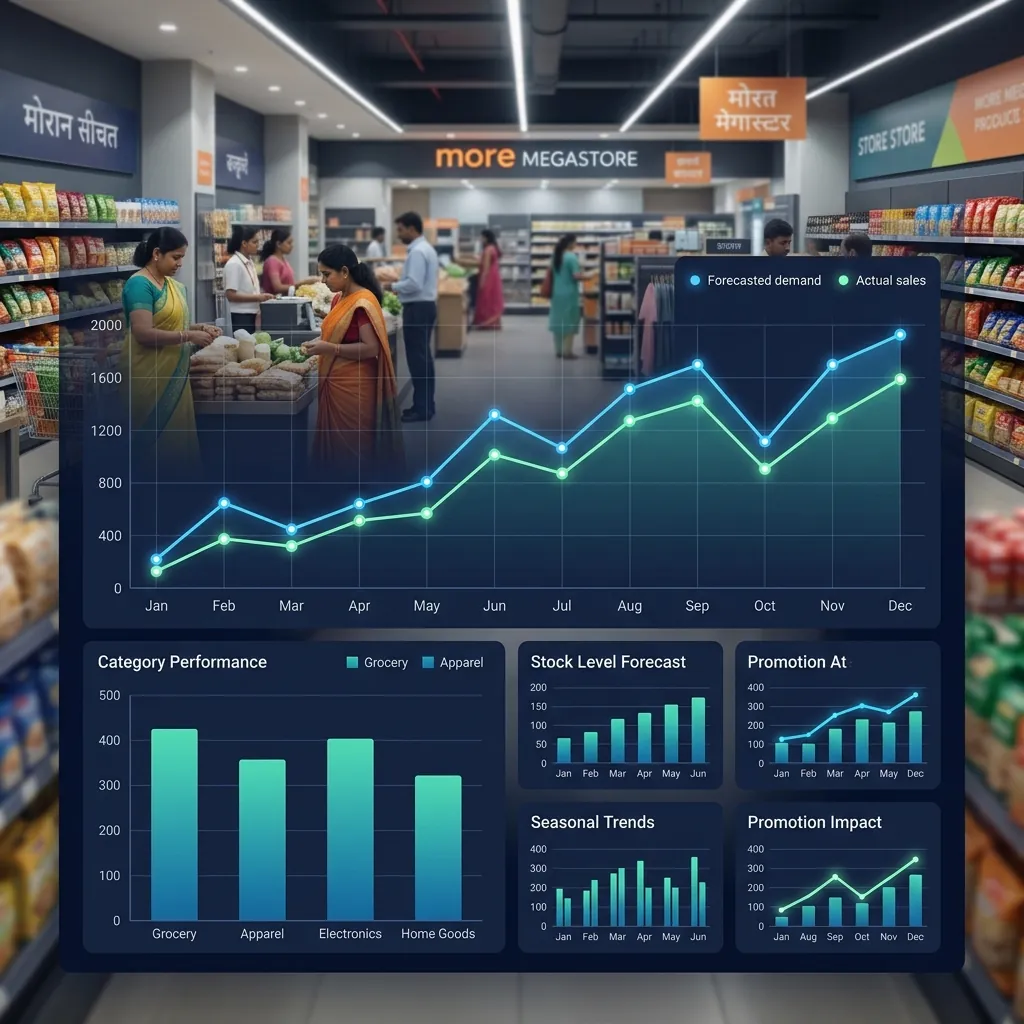
Amazon Go cashierless stores rely heavily on YOLO-style architectures. As you take a soda off the shelf, the ceiling cameras run object detection at 30 FPS. The algorithm tracks your hand, identifies the soda can, maps it to your physical skeletal structure, and adds it to your virtual cart instantaneously.
2. Traffic Management and Smart Cities
Cities install edge-cameras running YOLO at busy intersections. The AI identifies cars, buses, bicycles, and pedestrians in real-time. If it detects a traffic jam forming in the northbound lane, it autonomously alters the traffic light timing to relieve the congestion before gridlock occurs.
3. Robotics and Drone Navigation
A search-and-rescue drone scanning a dense forest post-hurricane uses YOLO. It flies at 40 mph, processing the video feed locally. When the YOLO model identifies the pixels corresponding to a "human shape" hidden under debris, it instantly flags the GPS coordinates back to the rescue team.
The Trade-Off: Speed vs. Micro-Accuracy
If YOLO has a weakness, it is detecting incredibly tiny, dense objects (like a flock of 50 small birds in the distance). Because it divides the image into a grid, if four very small objects occupy the exact same grid square, YOLO struggles to differentiate them better than slower, specialized algorithms.
However, for 95% of enterprise use cases—where identifying cars on a highway or defects on an assembly line at high speed is the goal—YOLO remains the undisputed king of computer vision.
Looking to implement real-time object detection in your physical operations? Explore our Computer Vision services or use our CV ROI Estimator to calculate your potential savings. Partner with the computer vision engineers at AdaptNXT to train and deploy custom YOLO models.