
For over a century, the final step of the manufacturing assembly line has remained largely unchanged: a human inspector visually examining the finished product for defects. Whether it is a cracked screen on a smartphone, a misaligned weld on a car door, or a missing pill in a blister pack, human eyes have been the ultimate fail-safe against faulty products reaching the consumer.
However, human inspection is fundamentally flawed. It is slow, subjective, and highly susceptible to fatigue. By the end of an eight-hour shift, an inspector's accuracy plummets. In 2026, the factory floor is being completely overhauled by a subset of Artificial Intelligence known as Computer Vision (CV), shifting quality control from a subjective human art to an objective, mathematically perfect science.
The Shift from Traditional Machine Vision to AI
Manufacturing has used cameras for decades (traditional Machine Vision). But those older systems relied on rigid rules programmed by engineers. An engineer had to write code saying, "If a dark pixel appears exactly 4mm from the edge of the circuit board, flag it as a burn mark." If the burn mark appeared 5mm from the edge, the rigid code failed, and a defective product shipped.
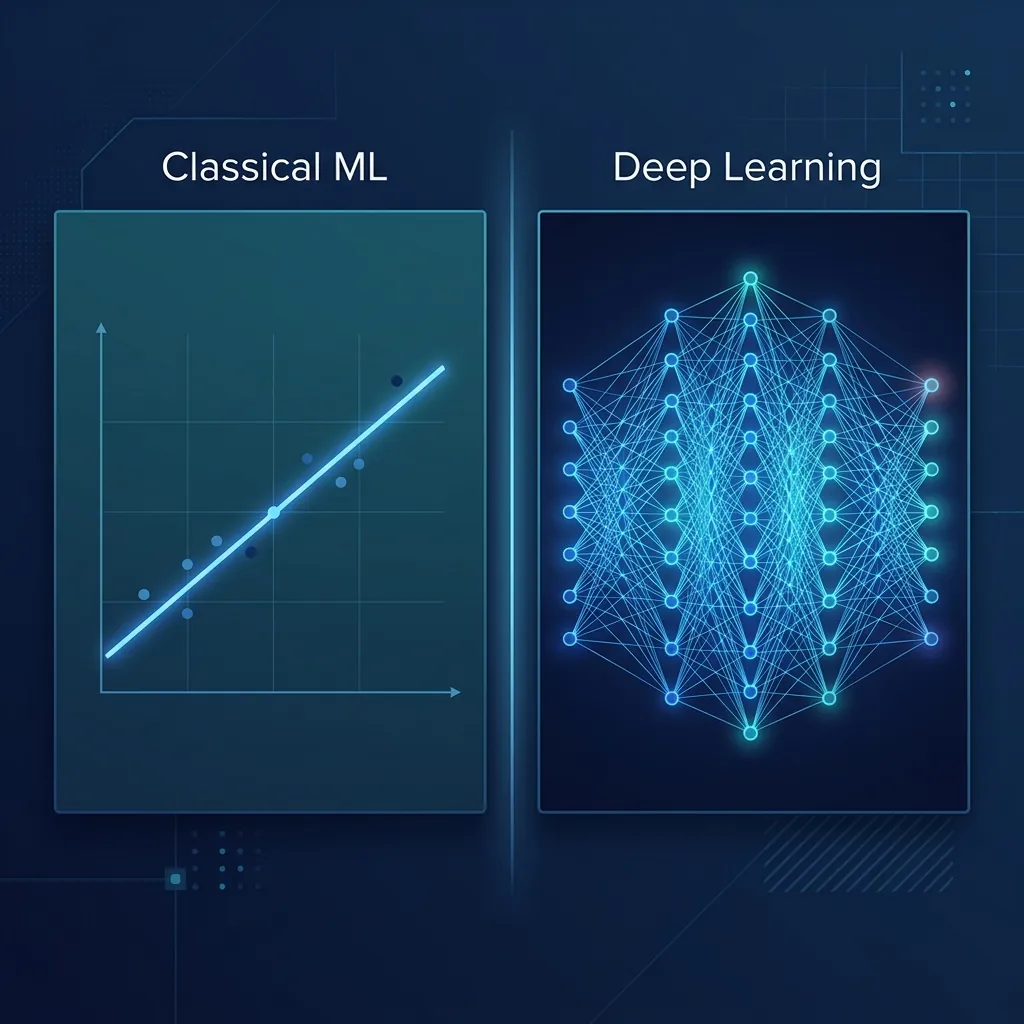
Modern Computer Vision uses Deep Learning. Instead of writing rules, data scientists feed a neural network thousands of images of "perfect" circuit boards, and thousands of images of "defective" ones. The model learns for itself what a defect looks like, regardless of rotation, lighting changes, or positioning on the conveyor belt.
High-Impact Use Cases in Industry
1. Micro-Defect Detection in Electronics
Modern semiconductor fabrication and PCB (Printed Circuit Board) assembly involve components measured in nanometers. A microscopic scratch or a tiny solder bridge can short-circuit an entire device. High-resolution CV cameras positioned over the high-speed line analyze the boards in milliseconds. If a defect is detected, the AI triggers a robotic arm to instantly divert the board into a rework bin, without ever slowing down the primary line speed.
2. Predictive Maintenance through Thermal Imaging
Computer Vision isn't limited to the visible light spectrum. By pairing an AI model with thermal cameras, factories constantly monitor the temperature of critical machinery (like stamping presses or extrusion motors). This technology is already being used in high-stakes environments like railway axle monitoring. If the CV model detects an anomalous heat pattern indicating a bearing is about to seize, it proactively generates a maintenance ticket, preventing catastrophic and expensive unplanned downtime.
3. Regulatory Compliance in Pharmaceuticals
In pharma, an incorrectly labeled vial can be fatal. CV systems are trained to perform OCR (Optical Character Recognition) on high-speed lines, reading the lot number, expiration date, and barcode of 500 vials a minute. Simultaneously, the system verifies that the fluid level matches the required spec and that the stopper is completely sealed. Anything less than 100% compliance halts that specific unit.
The Hardware: Edge vs. Cloud Processing
The biggest challenge in manufacturing CV is latency. If a camera takes a photo, uploads it to a cloud server in AWS, runs the AI model, and sends the "reject" signal back down to the robotic arm, the product has already moved 10 feet down the conveyor belt.
To solve this, factories are deploying Edge AI. The deep learning models are loaded directly onto ruggedized industrial computers (running NVIDIA Jetson or similar edge GPUs) physically bolted to the manufacturing line. The image is processed locally in under 15 milliseconds, ensuring the robotic arm ejects the exact defective unit immediately.
The ROI of Perfect Yield
The financial impact of deploying Computer Vision is immediate and multi-fold. It slashes "false rejects" (perfect products mistakenly thrown away by tired humans), entirely eliminates the catastrophic brand damage of a mass product recall, and allows human inspectors to be upskilled into higher-value continuous improvement roles.
Transitioning to AI-driven quality control is a significant hardware and software endeavor. Use our Computer Vision ROI Estimator to understand the potential savings for your line, or contact the computer vision engineering team at AdaptNXT to arrange a feasibility study for your assembly line.