
If you look at enterprise technology budgets, you will usually find highly siloed spending. The factory floor manager buys 1,000 IoT vibration sensors to monitor motor health. The security director buys high-end Computer Vision cameras to monitor the warehouse perimeter. The IT director invests heavily in Edge Computing servers to reduce AWS monthly bills.
When these technologies are siloed, they provide linear, incremental value. An IoT sensor tells you a machine is hot; a human has to go fix it. A camera tells you a box fell off a shelf; a human has to go pick it up.
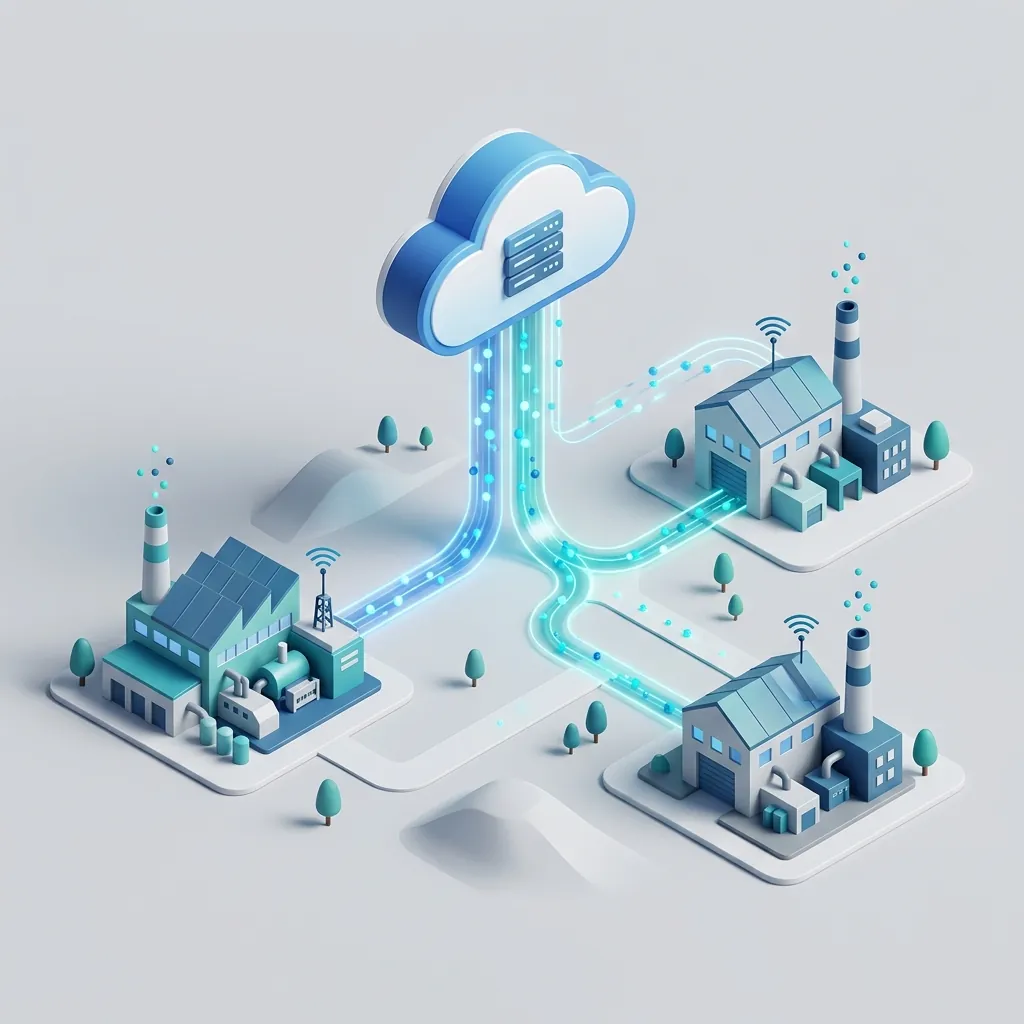
The true fourth industrial revolution—Industry 4.0—only occurs when these three distinct technologies converge into a unified, autonomous Smart System. This is the AI Triad: The Nervous System (IoT), The Eyes (Computer Vision), and The Brain (Edge Computing).
The Anatomy of an Autonomous System
To understand the immense power of this convergence, imagine a large-scale agricultural packaging facility. The conveyer belts are moving thousands of apples a minute into sorting bins.
1. The Eyes (Computer Vision)
High-speed optical cameras are mounted over the conveyor belts. Running real-time YOLO object detection algorithms, the cameras scan every single apple. The AI identifies bruised apples with 99.8% accuracy. But identifying the bruise is useless if the system cannot react fast enough to remove the apple before it falls into the "Premium" shipping crate.
2. The Brain (Edge Computing)
If the camera had to send the video feed to a cloud server to determine if the apple was bruised, the latency would result in the apple moving ten feet down the belt before the answer came back. Instead, an industrial Edge Server (housing an NVIDIA Jetson GPU) is bolted securely beneath the conveyor belt. Learn more in our edge hardware comparison guide.
3. The Nervous System (IoT via MQTT)
Once the Edge Brain decides the apple is bruised, it must command a machine to act. It generates a microscopic, 4-byte MQTT message containing the instruction. Because the MQTT protocol is ultra-lightweight and operates on a Publish/Subscribe model, the message travels locally across the factory floor network instantly to an IoT-enabled pneumatic robotic arm further down the line. The arm fires a burst of compressed air, knocking the bruised apple onto the "juicing" belt.
The result: 10,000 apples sorted per minute, zero cloud computing costs, zero humans required, and a mathematically perfect sorting yield.
Closing the Loop: Predictive Autonomy
The most advanced Triad architectures don't just react; they predict and self-heal.
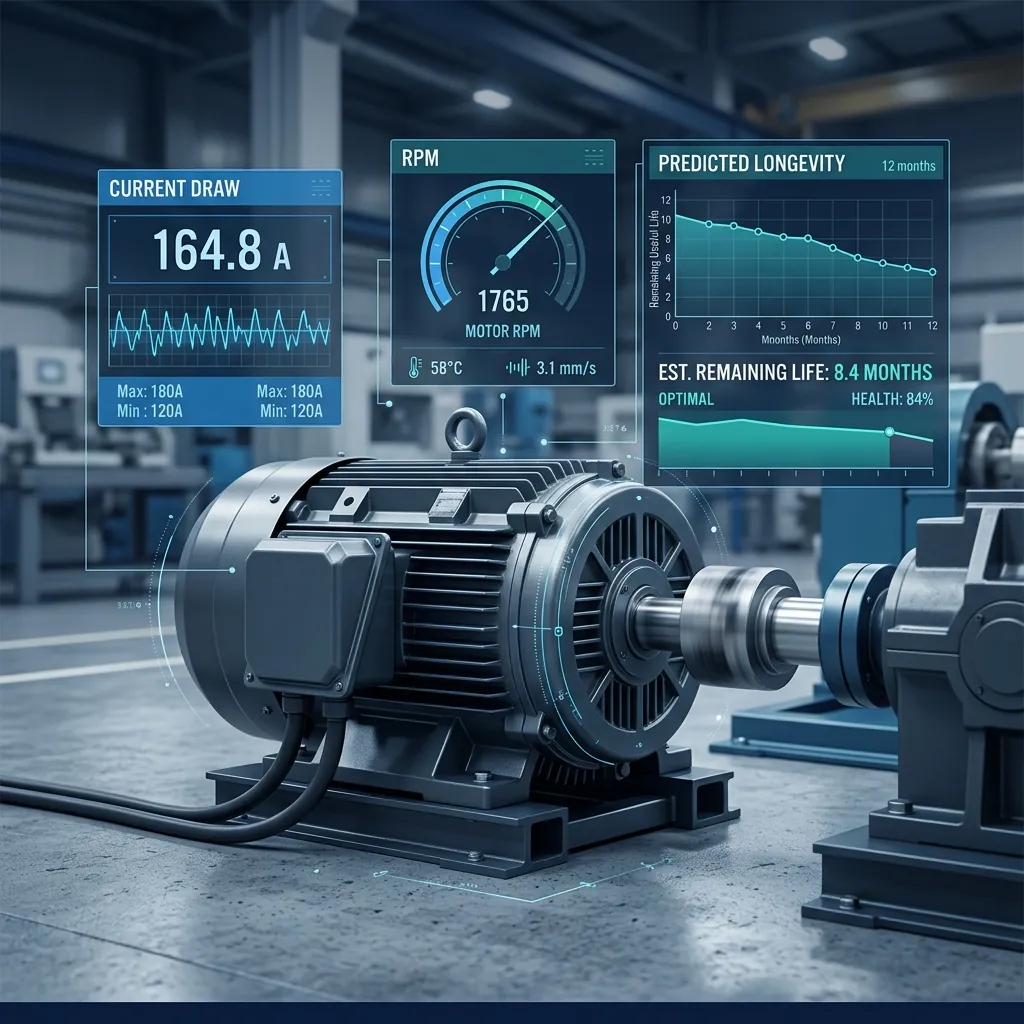
In a smart manufacturing plant, the Edge Computer doesn't just process camera data; it ingests data from hundreds of acoustic IoT sensors bolted to the pneumatic sorting arms. When the Edge AI cross-references the optical data (the arm is moving 4% slower than optimal) with the acoustic data (the arm's motor is emitting a slightly higher-pitched whine), the predictive maintenance model triggers.
The system determines the motor will fail in roughly 72 hours.
Because the entire Triad is integrated into the ERP via API, the Edge Server autonomously:
- Checks warehouse inventory for a replacement motor.
- If not in stock, fires an automated Purchase Order to the supplier.
- Schedules a maintenance window for 2:00 AM on Sunday during a shift change.
- Notifies the human maintenance technician to arrive at 2:00 AM with the specific wrench required.
This is the difference between an Automated system and an Autonomous system. Automation executes a rigid rule. Autonomy perceives its environment, makes complex decisions, and alters its reality to achieve an outcome.
Building the AI Triad requires hardware engineers, networking experts, and data scientists working in unison. Explore our Computer Vision expertise or IoT solutions to see how we build these systems. You can also estimate the impact using our CV ROI Estimator. Consult with the integrated engineering teams at AdaptNXT to map out your infrastructure convergence.