
Moving from a single-factory IoT pilot to an enterprise-wide deployment across multiple sites is not a matter of linear scaling—it is a qualitative shift in architectural complexity. In a multi-site environment, you must navigate diverse local network conditions, varying data residency requirements, and the critical need for a centralized "single pane of glass" management system. This reference architecture addresses these challenges with a focus on scalability and industrial-grade reliability.
The Core Problem: Latency, Bandwidth, and Reliability
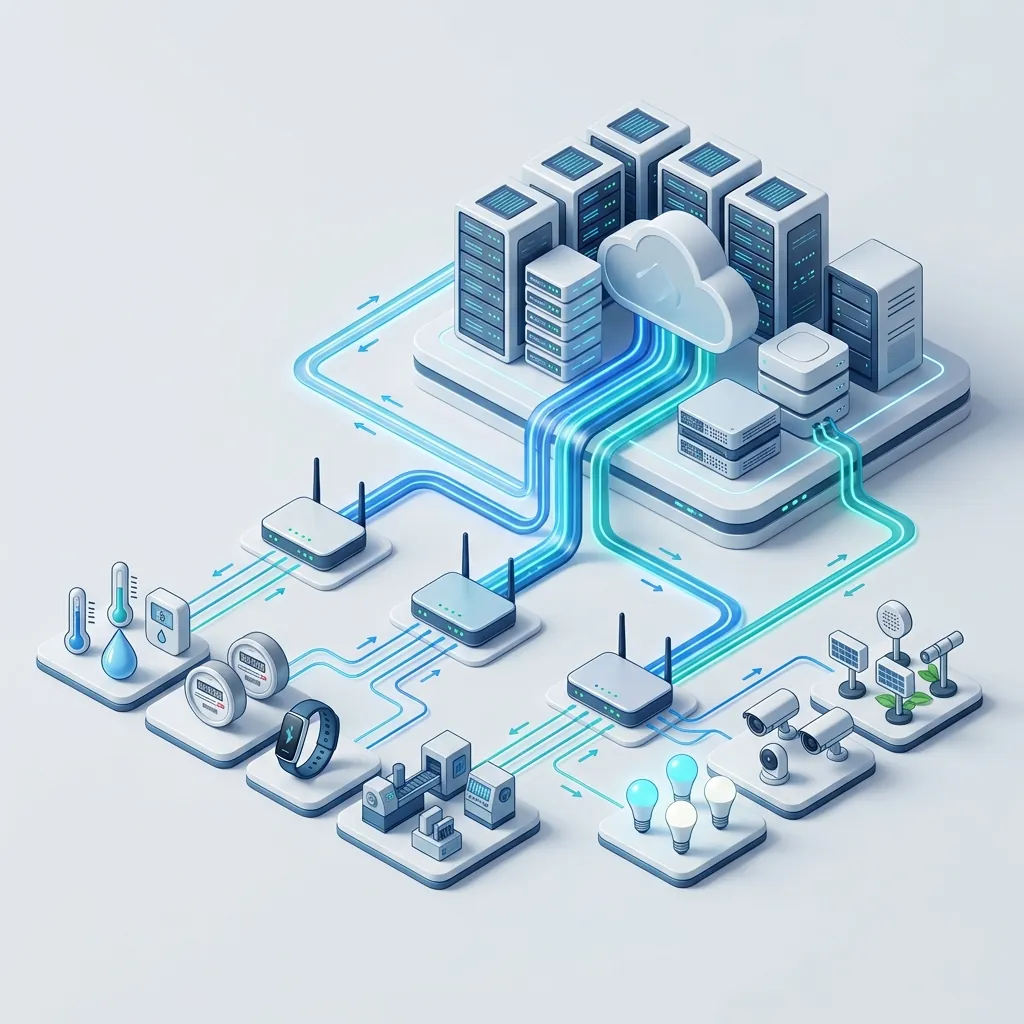
Cloud-only architectures are often unsuitable for multi-site manufacturing. If a factory's internet connection drops, the local assembly lines must not stop—and their data must not be lost. This necessitates a "distributed" approach where intelligence is pushed to the edge.
Reference Architecture Components
1. Local Edge Gateway (Per Production Line/Area)
The first layer is the Edge Gateway, typically a ruggedized industrial PC (IPC). Its primary roles are:
- Protocol Translation: Converting diverse machine data (Modbus, OPC-UA, Profinet) into a unified format like MQTT or JSON.
- Local Data Buffering: Storing data locally if the connection to the central server is lost, ensuring zero data loss.
- Real-time Alarms: Triggering immediate local actions (e.g., stopping a line) based on local sensor signals without waiting for the cloud.
2. Site Hub (Per Factory Site)
The Site Hub—often a local on-premise server or a edge compute cluster—aggregates data from multiple gateways within a single factory. It provides:
- Site-Level Visualization: Dashboards that factory managers use for real-time monitoring of their local performance (OEE, quality, throughput).
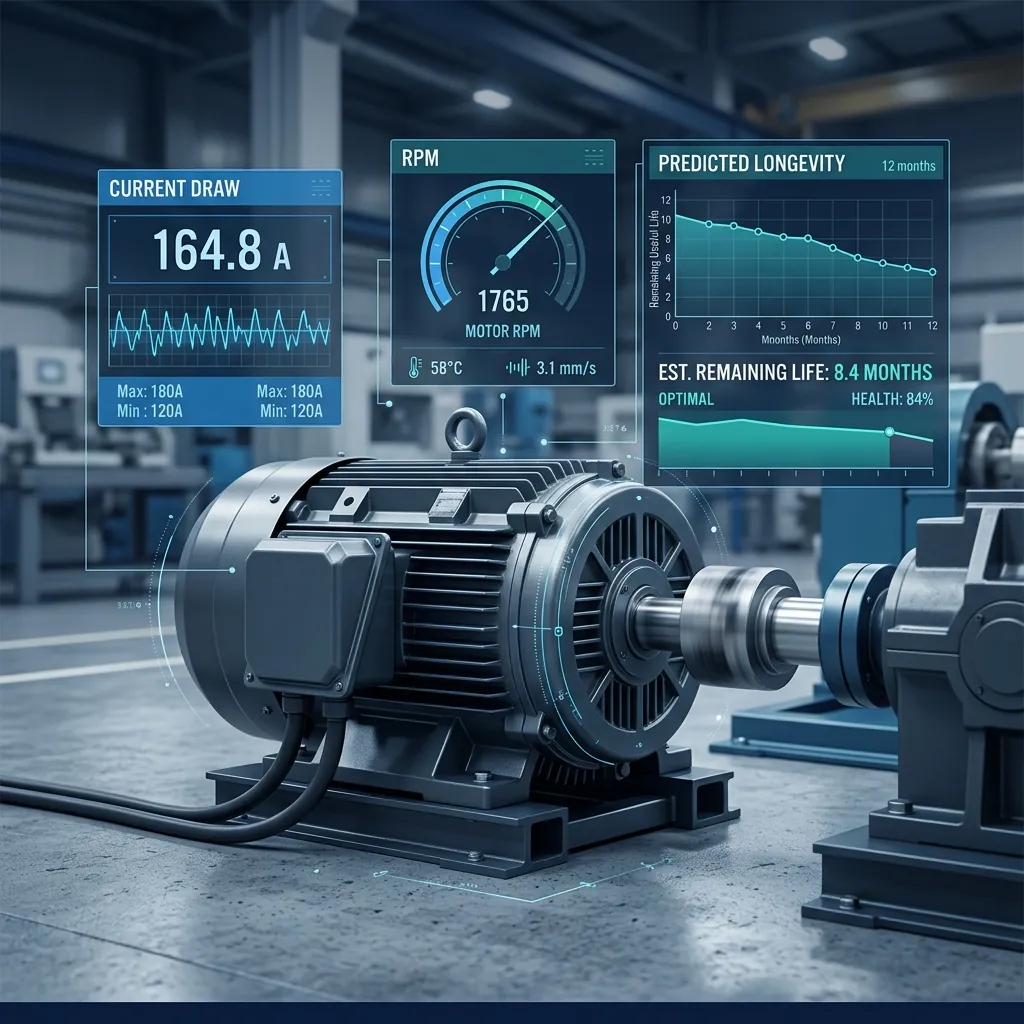
- Local Analytics: Running more complex ML models (like anomaly detection) that are too resource-heavy for gateways but too latency-sensitive for the cloud.
- Managed Data Sync: Intelligently syncing filtered, aggregated data to the Central Enterprise Platform to save bandwidth.
3. Central Enterprise Platform (Global/Region)
This is the centralized cloud or data center layer where all site data converges. Its functions include:
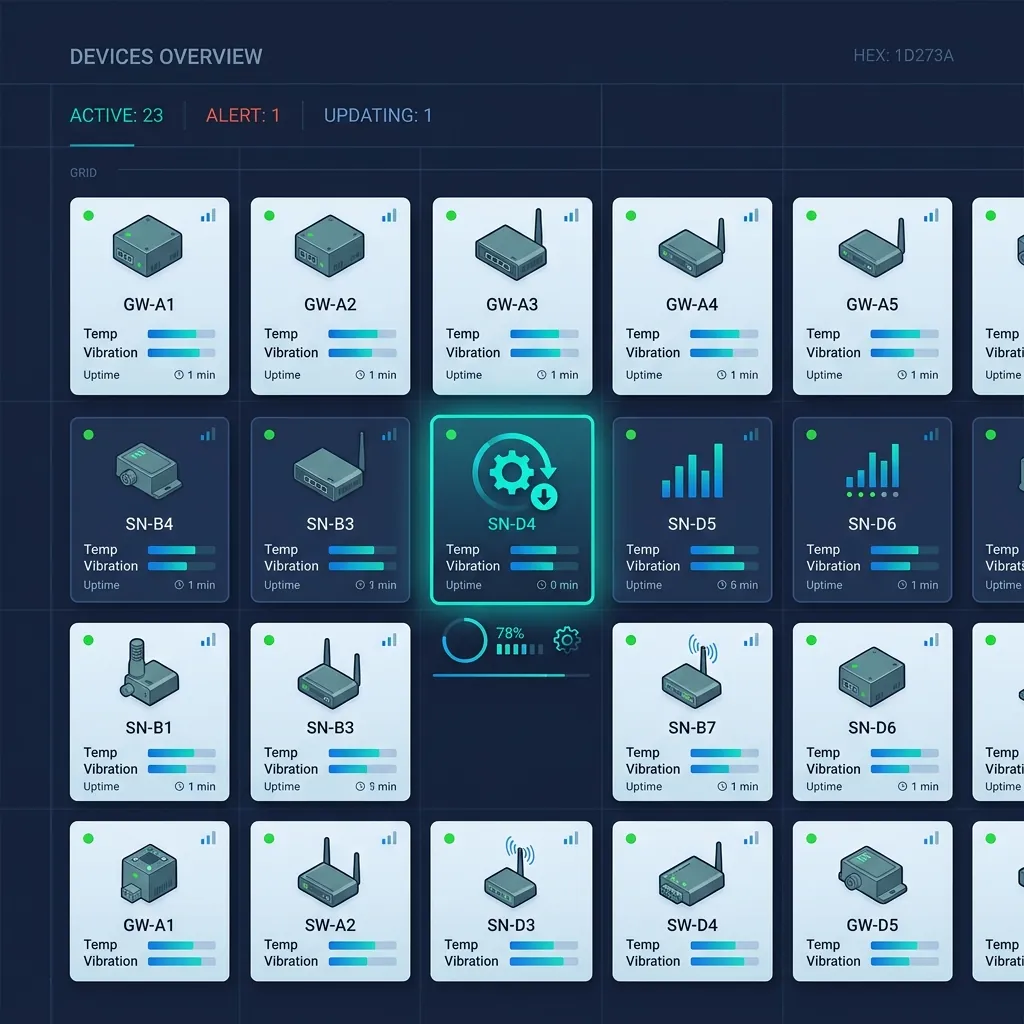
- Fleet Management: Managing firmware updates (OTA) and security patches for thousands of gateways and sensors across all sites.
- Cross-Site Benchmarking: Comparing the performance of similar production lines across different geographies to identify best practices.
- Aggregated Analytics: Running global demand forecasting or supply chain optimization models that require data from the entire operation.
Scalability: The "Pod" Design Principle
The key to scaling this architecture is the "Pod" design—treating each site's configuration as a template that can be deployed instantly to a new factory. By using Containerization (Docker/Kubernetes) and Infrastructure-as-Code (Terraform), you can ensure that the software stack is identical across all sites, dramatically reducing maintenance costs.
Conclusion: Building for the Long Term
A scalable IoT architecture is an investment in future flexibility. By adopting a distributed, edge-first approach, manufacturers can build a "nervous system" that is both resilient to local failures and powerful enough to drive global operational insights.
AdaptNXT designs and deploys scalable IoT architectures for global manufacturers. Connect with our architects to design your enterprise IoT roadmap.