
Agriculture feeds the world, yet it remains one of the least data-driven industries. Decisions about watering, fertilizing, and harvesting are still made largely by intuition and tradition. With a global population approaching 10 billion and climate unpredictability increasing, that's a problem we can't afford to ignore. IoT sensors are changing the equation — giving farmers the real-time, granular data they need to make smarter decisions and produce more with less.
This guide covers the key IoT sensor types used in modern agriculture, how they work together in a precision farming system, and the ROI you can realistically expect from a smart agriculture deployment.
Why Traditional Farming Needs a Data Upgrade
Conventional farming treats fields as uniform — same irrigation schedule, same fertilizer dosage, same pesticide application across the whole crop. But fields are anything but uniform. Soil moisture varies across a field. Micro-climates create temperature differences. Pest pressure builds in specific zones before spreading.
This uniformity is expensive: excess water causes root rot and leaches nutrients, over-fertilization pollutes waterways, and blanket pesticide applications kill beneficial insects. IoT sensors make precision possible — applying resources exactly where and when they're needed, nothing more.
Key IoT Sensor Types in Smart Agriculture
Soil Moisture Sensors
Soil moisture sensors — typically capacitive or tensiometric — measure water content at multiple soil depths. Placed throughout a field, they give a real-time map of soil moisture, enabling irrigation systems to activate only in dry zones and only when soil moisture drops below an optimal threshold. Studies consistently show 25–40% water savings compared to traditional schedule-based irrigation.
Soil Nutrient Sensors
Advanced electrochemical sensors can measure the concentration of nitrogen, phosphorus, potassium, and pH directly in the soil. Paired with GPS, they create nutrient maps that enable variable-rate fertilizer application — adding more where the soil is deficient, less where it's rich. This can reduce fertilizer costs by 15–30% while improving crop quality.
Weather and Microclimate Sensors
On-field weather stations measure temperature, humidity, rainfall, wind speed, and solar radiation at the crop level — not at a regional weather station 20km away. This hyperlocal data feeds irrigation decisions, frost alerts (critical for fruit orchards), and disease prediction models. Many fungal diseases require specific temperature-humidity combinations to spread; knowing when those conditions exist allows targeted preventive action.
Leaf Wetness and Canopy Sensors
Leaf wetness sensors measure how long leaves remain wet — a key indicator of disease risk. Canopy sensors measure crop density and health using spectral reflectance, often integrated into drone-mounted multispectral cameras that can survey hundreds of acres in a single flight and identify stress zones before they're visible to the naked eye.
Livestock Monitoring Sensors
Smart agriculture extends beyond crops. Wearable sensors on livestock track location, activity, body temperature, and rumination patterns. Changes in these metrics can signal illness before visible symptoms appear, enabling early treatment and reducing mortality rates. Estrus detection sensors have been shown to improve conception rates by 10–20%.
How a Precision Farming IoT System Works
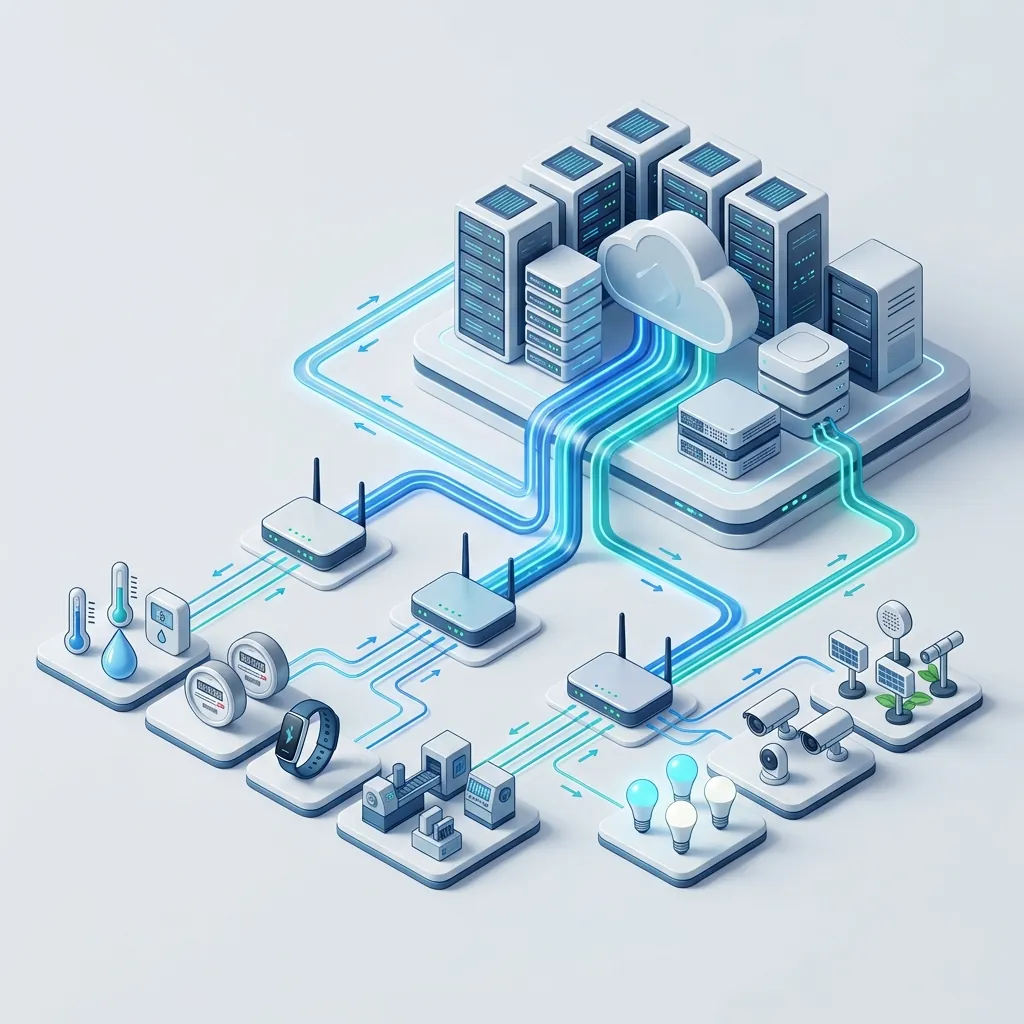
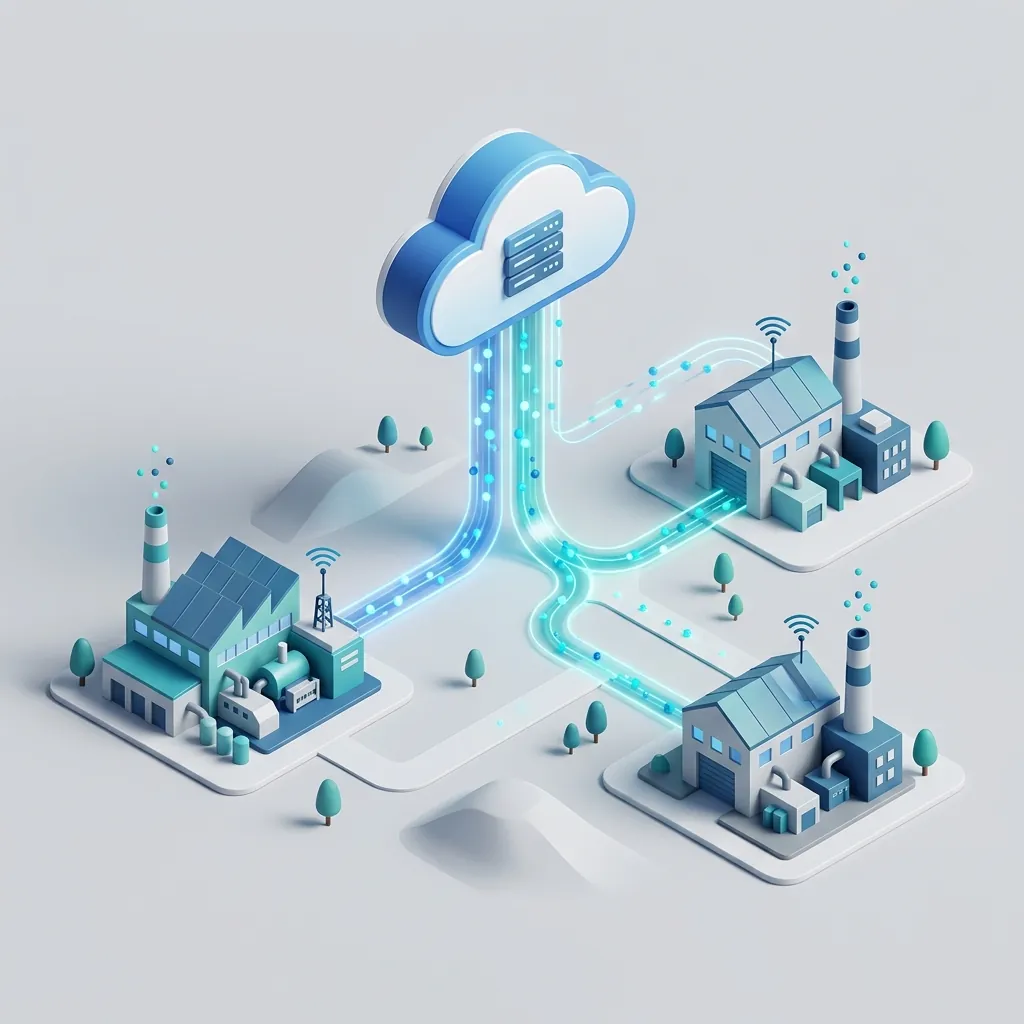
A complete smart agriculture IoT system has four layers:
- Sensor layer: In-field sensors collecting soil, weather, and crop data
- Connectivity layer: LoRaWAN or NB-IoT for low-power, wide-area sensor communication across large fields
- Edge/gateway layer: Local processing for time-sensitive decisions like irrigation activation
- Cloud/analytics layer: Historical data, ML-driven predictions, agronomist dashboards, and integration with ERP/supply chain systems
LoRaWAN (Long Range Wide Area Network) is particularly well-suited to agriculture: it achieves 10–15km range on a single gateway, handles thousands of sensors on one network, and operates on battery power for years. A single LoRaWAN gateway can cover an entire mid-sized farm.
"Precision agriculture is not about technology for technology's sake. It's about giving every farmer the same quality of decision-making data that a scientist has in a laboratory."
Real Results: What Farmers Are Achieving
Precision agriculture IoT deployments consistently deliver measurable returns:
- Water savings of 30–50% through sensor-driven irrigation versus fixed schedules
- Fertilizer reduction of 15–20% through variable-rate application guided by soil nutrient maps
- Yield increases of 10–15% by catching and treating crop stress earlier
- Pesticide reduction of 20–30% through targeted spraying guided by sensor-identified pest pressure zones
- Labour cost reduction through automated irrigation and monitoring replacing manual field walks
Getting Started with Smart Agriculture IoT
You don't need to instrument an entire farm on day one. A typical adoption path:
- Start with soil moisture sensors and automated irrigation on your highest-value crop
- Add weather sensors for disease prediction and frost alerts
- Expand to nutrient sensing and variable-rate application
- Integrate drone-based canopy mapping for full-field health visibility
- Build out analytics and connect to supply chain for predictive harvest planning
The cost of a basic smart irrigation deployment has fallen dramatically — a starter system covering 100 acres can now be deployed for under $5,000 in hardware, with ROI typically within one growing season through water and input savings alone.
AdaptNXT has built IoT solutions for agricultural and industrial monitoring applications. If you're exploring smart agriculture technology, get in touch — we'd love to help you design the right system for your operation.