
The era of treating all website visitors exactly the same is over. If two different customers log onto your e-commerce homepage and see the exact same layout, product recommendations, and pricing, you are operating with an antiquated architecture. In 2026, the competitive advantage in digital retail belongs entirely to the brands leveraging Machine Learning to create dynamic, individualized experiences.
Artificial Intelligence in e-commerce has moved far beyond chatbots. It is now the invisible engine driving catalog presentation, margin optimization, and supply chain logistics. Here are the three primary pillars of AI-driven digital retail.
1. Hyper-Personalization (Beyond "Customers who bought this also bought...")
Traditional recommendation engines rely on simple collaborative filtering: if User A and User B both bought a tent, and User A also bought a sleeping bag, show the sleeping bag to User B. This is rudimentary and often highly inaccurate.
Modern AI personalization utilizes deep learning to analyze the intent behind a user's session in real-time. The algorithm tracks micro-behaviors: how long a user hovers over an image, whether they filter by "lowest price" or "newest arrivals", and how their mouse tracks across the screen.
If a user spends five minutes clicking exclusively on sustainably sourced, premium hiking gear, the AI instantly re-renders the homepage for their next click. It pushes high-margin, eco-friendly products to the top row, changes the hero banner copy to appeal to environmental conscious buyers, and completely hides the budget-tier items. The store essentially rearranges its aisles for the shopper while they are walking through it.
2. Algorithmic Dynamic Pricing
Pricing is no longer a static number decided by a merchant in a spreadsheet once a season. It is a fluid metric optimized for maximum margin extraction at any given millisecond. The airline and ride-share industries have utilized dynamic pricing for a decade; AI has now brought it to retail.
Dynamic pricing algorithms analyze dozens of variables simultaneously to set optimal prices:
- Competitor Scraping: If Amazon lowers the price of a specific camera by $10, your algorithm can instantly match it, or drop it by $11, without human intervention.
- Inventory Levels: If you are overstocked on winter coats in late February, the algorithm slowly decreases the price until the conversion rate reaches a velocity that clears the warehouse before spring inventory arrives.
- Demand Elasticity: If an influencer goes viral wearing your sunglasses, the resulting massive spike in traffic will trigger the AI to incrementally raise the price, capturing higher margins while the demand is inflexible.
3. Predictive Inventory and Supply Chain Logistics
The single greatest threat to retail profitability is dead stock (inventory you bought but can't sell) and stockouts (inventory you could have sold but didn't have).
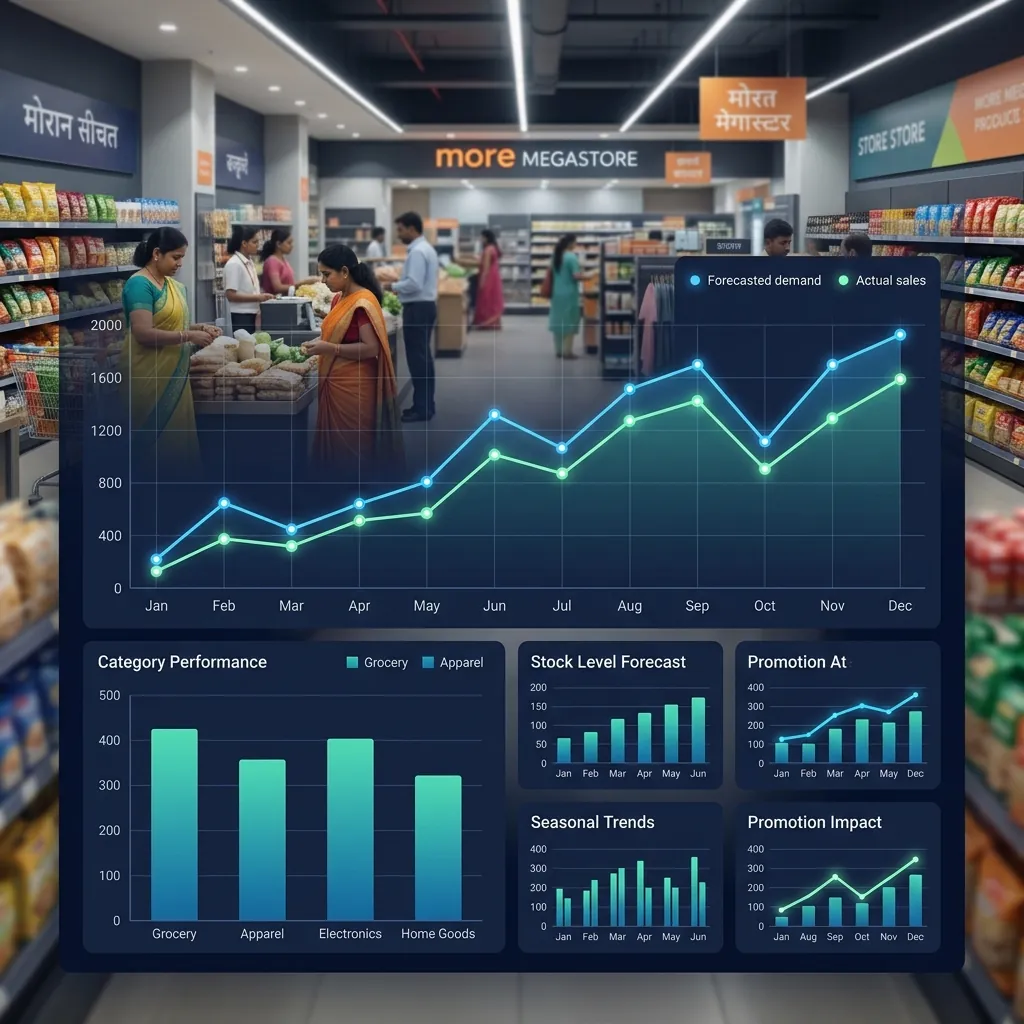
Traditional demand forecasting looks at historical sales: "We sold 1,000 units last December, let's order 1,100 this December." Machine Learning drastically increases the accuracy of these forecasts by analyzing external data sets alongside historical sales.
An enterprise AI logistics model will predict demand by factoring in upcoming global weather patterns (a mild winter means lower jacket sales), macro-economic indicators (inflation rates altering consumer spending confidence), and real-time social media sentiment analysis. The AI then automatically generates procurement orders optimized for warehouse capacity and shipping lead times, ensuring capital is never tied up in inventory sitting on a shelf.
If your e-commerce infrastructure is still static, you are losing margin to competitors whose stores adapt in real-time. Speak with the AI engineering team at AdaptNXT to integrate predictive algorithms into your retail backend.