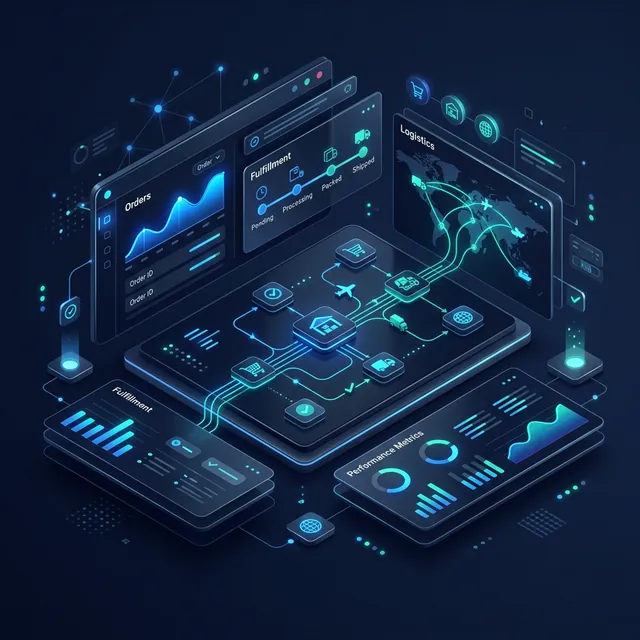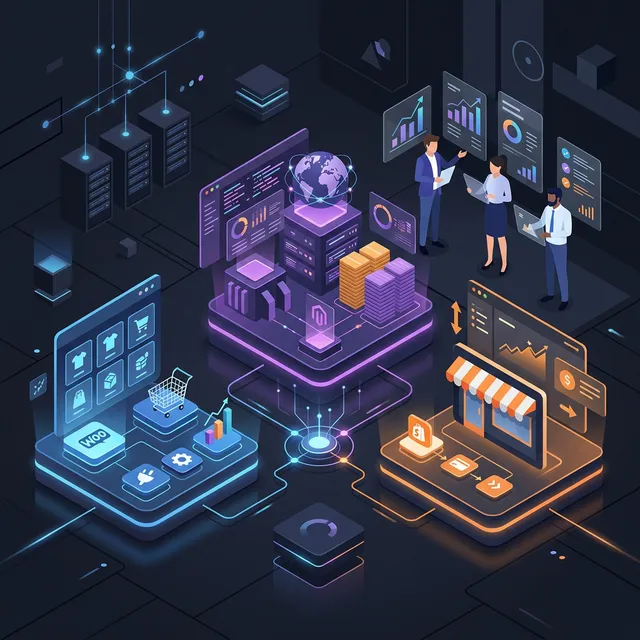

Ten years ago, a retailer had channels: a physical store, maybe a website. Customers chose one or the other. The channels operated independently, with separate systems, separate inventory, and separate teams. Today, that model is broken. Customers don't think in channels — they think in journeys. They browse on their phone, research on their laptop, pick up in store, and return by mail. Retailers who haven't unified their operations around this reality are losing customers to those who have.
This is omnichannel retail — not multi-channel (having multiple channels) but genuinely unified commerce, where every customer touch point is connected.
Omnichannel vs. Multi-Channel: The Critical Difference
Multi-channel means being present on multiple channels. You have a website, an Amazon storefront, and physical stores — three separate operations that happen to share a brand. Customers who buy on Amazon get a different experience than those who buy in store. Inventory is managed separately. There's no coordination.
Omnichannel means connecting those channels so the experience is seamless from the customer's perspective. The shopping cart follows you from mobile to desktop. Store associates can see your online order history. You can buy online, pick up in store. You can return in store what you bought online. Your loyalty points work everywhere. The business sees one customer, regardless of where they interact.
Why Customers Now Demand Omnichannel Experiences
Customer behavior has driven this shift, not technology. Studies consistently show that omnichannel shoppers have 30% higher lifetime value than single-channel shoppers and shop 1.7x more frequently. They're not a niche — they're your most valuable customers.
- Research online, buy in store (ROPO): Over 80% of in-store purchases are preceded by online research. Disconnected online and offline experiences break the purchase journey.
- Click and collect: Buy-online-pickup-in-store (BOPIS) has grown enormously — it offers online convenience without delivery wait time and drives incremental in-store purchases.
- Social commerce: Instagram and TikTok are now legitimate purchase channels. Products discovered through social content should be purchasable in moments, with fulfillment integrated into your existing operations.
- Unified loyalty: Customers expect their activity to be recognized everywhere. A loyalty program that only works online or only works in store feels like a broken promise.
"In an omnichannel world, the customer channel doesn't matter — the customer relationship does. Everything else is plumbing."
The Four Pillars of an Omnichannel Operation
1. Unified Inventory Visibility
The foundation of omnichannel is knowing where your inventory actually is — in real time, across every location. Warehouse stock, store backroom stock, in-transit stock, stock on the shop floor — all visible together, with accurate count and location. This enables every customer-facing capability: accurate online availability, BOPIS, ship-from-store, and endless aisle (ordering from store for home delivery when a product is out of local stock).
2. Unified Customer Data
A single customer profile that accumulates purchase history, preference data, and behavioral signals across all channels. When a customer walks into your store, the associate should be able to see their online browsing history, their abandoned carts, and their previous purchases. This isn't surveillance — it's service. Customers who feel known return more often.
3. Seamless Fulfillment Flexibility
Omnichannel fulfillment means matching the order to the best fulfillment method based on proximity, inventory, and cost: ship from warehouse, ship from nearest store, click and collect at any location, or dropship from supplier. This flexibility improves margins, delivery speed, and the customer experience simultaneously.
4. Consistent Experience Across Touch Points
Pricing should be consistent across channels (or transparently different with clear rationale). Promotions should work everywhere. Returns should be possible through any channel. Service quality should match the brand promise regardless of whether the customer is talking to a chatbot, a store associate, or a phone agent.
The Technology Stack That Enables Omnichannel
You can't run an omnichannel operation on disconnected systems. The technology requirements:
- Unified commerce platform or OMS: A single system of record for inventory and orders across all channels
- Customer Data Platform (CDP): Aggregating customer data from all touch points into a unified profile
- Point of Sale (POS): Connected to the same inventory and customer data as your e-commerce platform
- Robust API layer: Connecting your e-commerce platform, ERP, WMS, POS, and CRM so data flows in real time
Getting Started: The Omnichannel Roadmap
Full omnichannel is an evolution, not a switch you flip. A practical progression:
- Start with unified inventory visibility — you can't do anything else well without it
- Add BOPIS — high customer demand, strong business case, relatively contained implementation
- Build the unified customer profile — connect POS and e-commerce customer data
- Unify loyalty across channels
- Enable ship-from-store for faster fulfillment and reduced shipping costs
- Build out personalization based on unified customer data
AdaptNXT has helped retailers build omnichannel capabilities across technology stacks. Reach out to discuss where your omnichannel journey should start.