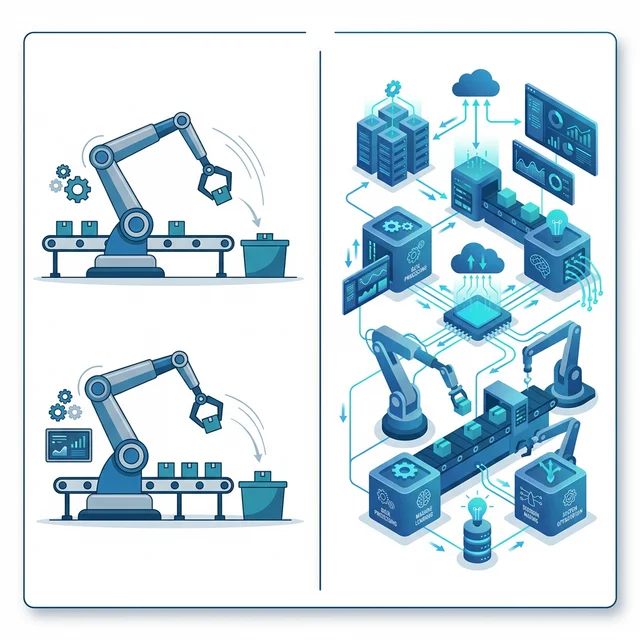

There is a stark dividing line in the world of conversational automation between a "Chatbot" and a "Digital Assistant." A chatbot can tell a customer your return policy is 30 days. A Digital Assistant can tell a customer that their specific 30-day return window for the blue jacket they bought on Tuesday expires next Friday, and then instantly generate a printable return label.
The difference between these two tiers of automation is entirely dependent on backend integration. An AI model isolated from your company's data is essentially a glorified FAQ page. To deliver true enterprise value, the conversational layer must be deeply integrated into the systems of record: your Customer Relationship Management (CRM) and Enterprise Resource Planning (ERP) platforms.
The Architecture of an Integrated Bot
To safely connect an external messaging channel (like WhatsApp or a web widget) to a sensitive internal database (like SAP or Salesforce), enterprises use a middleware orchestration layer.
Here is how a typical integrated data flow operates:
- The Core Request: A user asks the bot on WhatsApp, "Where is my order?"
- The NLU Layer: The AI engine extracts the "Order_Tracking" intent and the user's phone number.
- The API Gateway: The middleware orchestration layer receives this intent, checks the user's authentication, and fires a secure REST or SOAP API call to the ERP.
- The Data Retrieval: The ERP queries the database using the phone number, finds the associated order, and returns a JSON payload (e.g., {"status": "shipped", "carrier": "FedEx", "tracking": "123456"}).
- The Dynamic Response: The AI engine takes that raw JSON data, wraps it in natural language, and sends it back to the user on WhatsApp.
CRM Integrations: Personalization and Handoffs
Connecting your bot to Salesforce, HubSpot, or Zoho is critical for three primary reasons:
1. Instant Contextual Recognition
When an existing customer initiates a chat, the bot triggers a CRM lookup using their phone number or email. Instead of greeting them with a generic "Hi, how can I help?" the bot can say, "Welcome back, Sarah. I see you have an open support ticket regarding your Wi-Fi router. Are you messaging about that?" Resolving the customer's intent in the first message creates incredible brand loyalty.
2. Automated Lead Capture
For B2B bots, the conversational UI acts as a dynamic form. Instead of dropping leads into an excel sheet, the bot uses the CRM's API to instantly create a new "Contact" record. It populates fields based on the conversation (Name, Company Size, Budget) and automatically assigns the lead to the correct Account Executive based on territory routing rules.
3. The Seamless Human Handoff
When the bot fails to resolve an issue, it must transfer the user to an agent. Because the bot is integrated with the CRM, it doesn't just transfer the chat; it instantly generates a ticket in the agent's dashboard containing the complete transcript of the bot interaction, plus the user's account history. The agent enters the chat with total visibility.
ERP Integrations: The Transactional Engine
While the CRM handles the "who," the ERP handles the "what." Integrating with SAP, Oracle, or Microsoft Dynamics allows the bot to execute complex transactions.
- Live Inventory Checks: A B2B customer asks the bot if 500 units of a specific SKU are available. The bot queries the ERP in real-time, confirms stock in the nearest warehouse, and can even place a 2-hour hold on the inventory.
- Invoice Generation: A client requests a copy of last month's invoice. The bot queries the financial ledger in the ERP, generates a PDF copy, and sends it directly via the chat interface without human intervention.
- Order Modification: A user realizes they ordered the wrong size. If the ERP confirms the order hasn't hit the packing floor yet, the bot can securely modify the attributes directly in the database.
Building these API bridges requires robust cybersecurity protocols and deep knowledge of enterprise data structures. Contact the integration engineers at AdaptNXT to map out a secure connection between your preferred conversational interface and your core systems of record.