
Retail has always been a game of razor-thin margins and ruthless competition. But the current environment — e-commerce giants with unlimited logistics budgets, supply chain volatility, and customers who expect two-day shipping as a baseline — has raised the operational bar dramatically. The retailers that are surviving and thriving are, without exception, using automation to do what humans alone can't: process thousands of orders accurately, respond to customers instantly, manage inventory in real time, and adapt to demand shifts faster than the market moves.
This is not about replacing retail workers. It's about giving retail teams the tools to compete with resources they previously couldn't access.
Inventory Management: The Biggest Opportunity
Inventory is simultaneously retail's biggest asset and biggest liability. Too much stock ties up cash and creates markdown risk. Too little means stockouts, lost sales, and customer frustration. Manual inventory management — periodic counts, gut-feel reordering, spreadsheet-based forecasting — can't handle the complexity of modern retail at scale.
Automated inventory management uses real-time point-of-sale data, historical demand patterns, seasonal trends, and supplier lead times to maintain optimal stock levels automatically. When stock levels fall below a dynamically calculated reorder point, purchase orders are generated and sent to suppliers without human intervention. Automated systems consistently deliver 20–30% reductions in inventory carrying costs while simultaneously reducing stockout incidents.
Order Fulfillment and Warehouse Automation
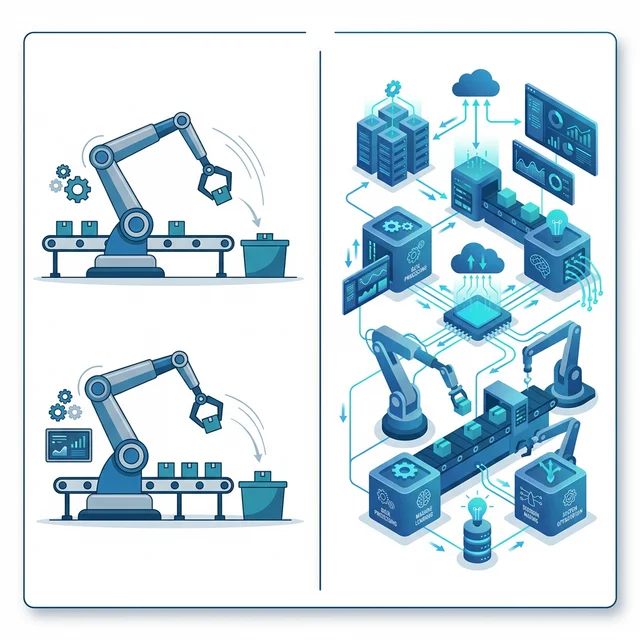
The surge in e-commerce orders has overwhelmed traditional pick-pack-ship operations. Manual fulfillment doesn't scale — more orders means more staff, more errors, and more cost. Warehouse automation — from automated pick carts guided by pick-path optimization software to robotic put-walls and autonomous mobile robots (AMRs) — enables fulfillment at volumes and speeds impossible with human-only operations.
Even without full robotic automation, software-driven improvements are significant: automated order routing to the optimal picking location, barcode-verified pack-out processes that eliminate mispicks, and automated carrier selection that chooses the cheapest shipping option that still meets delivery promise. These improvements typically reduce fulfillment error rates by 60–80% and cut order processing time by 40–50%.
Customer Service and Support Automation
Retail customer service handles a predictable set of high-volume inquiries: Where is my order? Can I return this? What's your exchange policy? I received the wrong item. Automated response systems — chatbots, intelligent email processing, self-service portals — can handle 50–70% of customer inquiries without human involvement, with faster response times than human agents and 24/7 availability.
The key is designing automation to handle the common cases brilliantly while seamlessly escalating genuinely complex situations to human agents. Customers who self-serve successfully report high satisfaction. The frustration comes from poorly designed automation that traps customers in loops without resolution — invest in designing the experience properly.
Pricing Automation and Dynamic Pricing
E-commerce pricing is now a real-time sport. Amazon changes prices millions of times per day, adjusting to competitor moves, demand signals, and inventory levels. Retailers using manual pricing strategies are always reacting to the market — never leading it. Automated repricing tools monitor competitor prices, demand signals, and margin constraints, adjusting prices within defined rules to stay competitive without eroding profitability.
"The retailers who win the next decade won't be bigger — they'll be faster. Automation is how a 500-person retailer moves at the speed of a 5,000-person one."
Marketing Automation and Personalization
Modern retail marketing is one-to-one at scale or it's ineffective. Customers expect relevant product recommendations, personalized offers based on their purchase history, and re-engagement messages when they've been inactive. Executing personalization manually across thousands or millions of customers is impossible. Marketing automation platforms do it automatically: triggered emails based on browsing behavior, personalized WhatsApp messages for loyalty members, cart abandonment sequences, and post-purchase cross-sell campaigns.
Retailers using personalization automation typically see 20–30% increases in email revenue and significant improvements in customer lifetime value through more frequent and relevant purchase cycles.
Returns Processing Automation
Returns are a hidden cost center in retail. Processing returns manually — receiving, inspecting, restocking or disposing, issuing refunds — is labour-intensive, inconsistent, and slow. Automated returns management systems guide customers through self-service return initiation, apply consistent assessment rules (what's restockable vs. disposable), and trigger refunds automatically upon receipt confirmation. This reduces returns processing time dramatically and improves the returns experience for customers, which increasingly influences purchase decisions.
Where to Start Your Retail Automation Journey
The highest-ROI starting points depend on your current pain points, but most retailers find rapid returns from either inventory automation or customer service automation — both have clear, measurable impact and relatively mature tooling. From there, the next step typically involves fulfillment optimization and then marketing personalization.
AdaptNXT has helped retailers across segments build automation into their operations. Talk to our team about where automation can have the biggest impact on your retail business.